
搜索更多信息
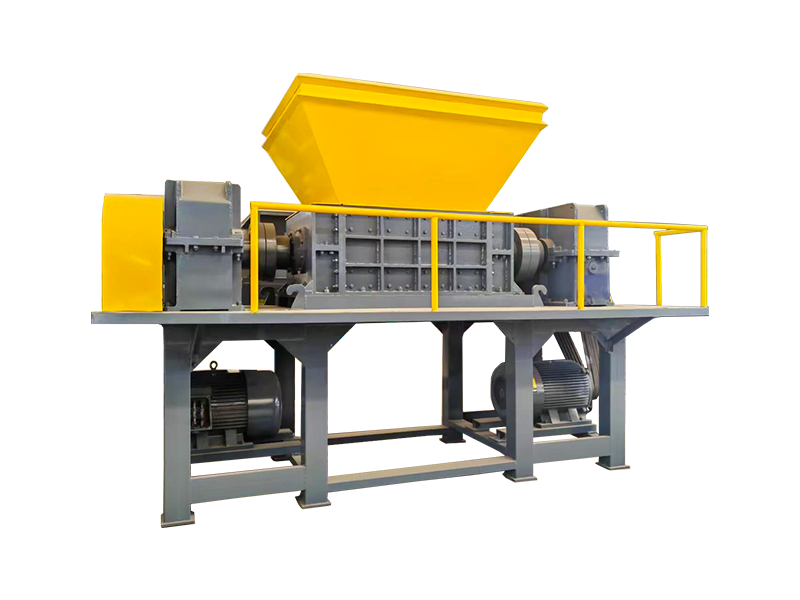
Double shaft shredder is a low-speed, high-torque primary shredding machine for waste recycling. It adopts two counter-rotating cutter shafts to shear and tear bulky, tough materials.
 Phone : +86 187 9029 6612
 Mail : vip@wtgh.net


Double shaft shredder is a low-speed, high-torque primary shredding machine for waste recycling. It adopts two counter-rotating cutter shafts to shear and tear bulky, tough materials. Widely used for scrap metal, waste tires, plastic barrels, wood pallets, e-waste, household appliances and MSW. It is usually the first crushing equipment in recycling lines, and can work with conveyors, magnetic separators, granulators for full automatic processing. Blade style, power and voltage can be customized.
Two shafts driven by independent motors and reducers rotate towards each other. The hook cutters grab materials into the shredding chamber. Materials are shredded by shear and tear force between interlocking blades. When overload or jamming happens, the PLC control system triggers automatic reverse rotation to release stuck material, then resumes forward running. Final shredded material discharges from the bottom. Screens are optional to limit output size.
✅ High torque, strong biting capacity for bulky waste
✅ Auto reverse protection against jamming
✅ Heat-treated alloy blades, easy replacement and low maintenance
✅ Low noise and low dust, eco-friendly
✅ Versatile for different waste by changing cutter configuration
✅ Heavy-duty welded frame, stable for 24h continuous operation
✅ Intelligent PLC control, easy to connect with whole recycling plant
| Type | power | Cutter Qty PCS | reducer | chamber mm | feeding port | overall size mm | weight T | capacity (T/h) |
| WL-800 | 15kw*2 | 30 | 400 | 600*388 | 1000*766 | 1820*800*1930 | 2.1 | 0.5-0.8 |
| WL-1000 | 22kw*2 | 20 | 500 | 640*588 | 1170*990 | 3260*1300*2370 | 3.5 | 1-1.5 |
| WL-1200 | 37kw*2 | 30 | 355 | 1200*788 | 1600*1200 | 4700*2000*2700 | 8 | 2.5-3 |
| WL-1500 | 55kw*2 | 30 | 400 | 1500*1188 | 1900*1450 | 5000*2200*2900 | 18 | 8-10. |
| WL-1800 | 75KW*2 | 36 | 400 | 1800*1188 | 2300*1450 | 5300*2150*3000 | 20 | 12-15. |
| WL-2000 | 90kw*2 | 24 | 450 | 2000*1188 | 2300*1500 | 5400*2150*3000 | 25 | 20-25. |
| WL-2200 | 110kw*2 | 28 | 240 | 2200*1578 | 3100*2500 | 6200*2700*3500 | 33 | 26-30 |
| WL-2400 | 132kw*2 | 24 | 240 | 2400*1678 | 3200*2600 | 7300*2800*3800 | 38 | 30-35. |
| WL-2800 | 185kw*2 | 28 | 260 | 2800*2000 | 3700*3000 | 7800*2800*3800 | 45 | 35-40 |
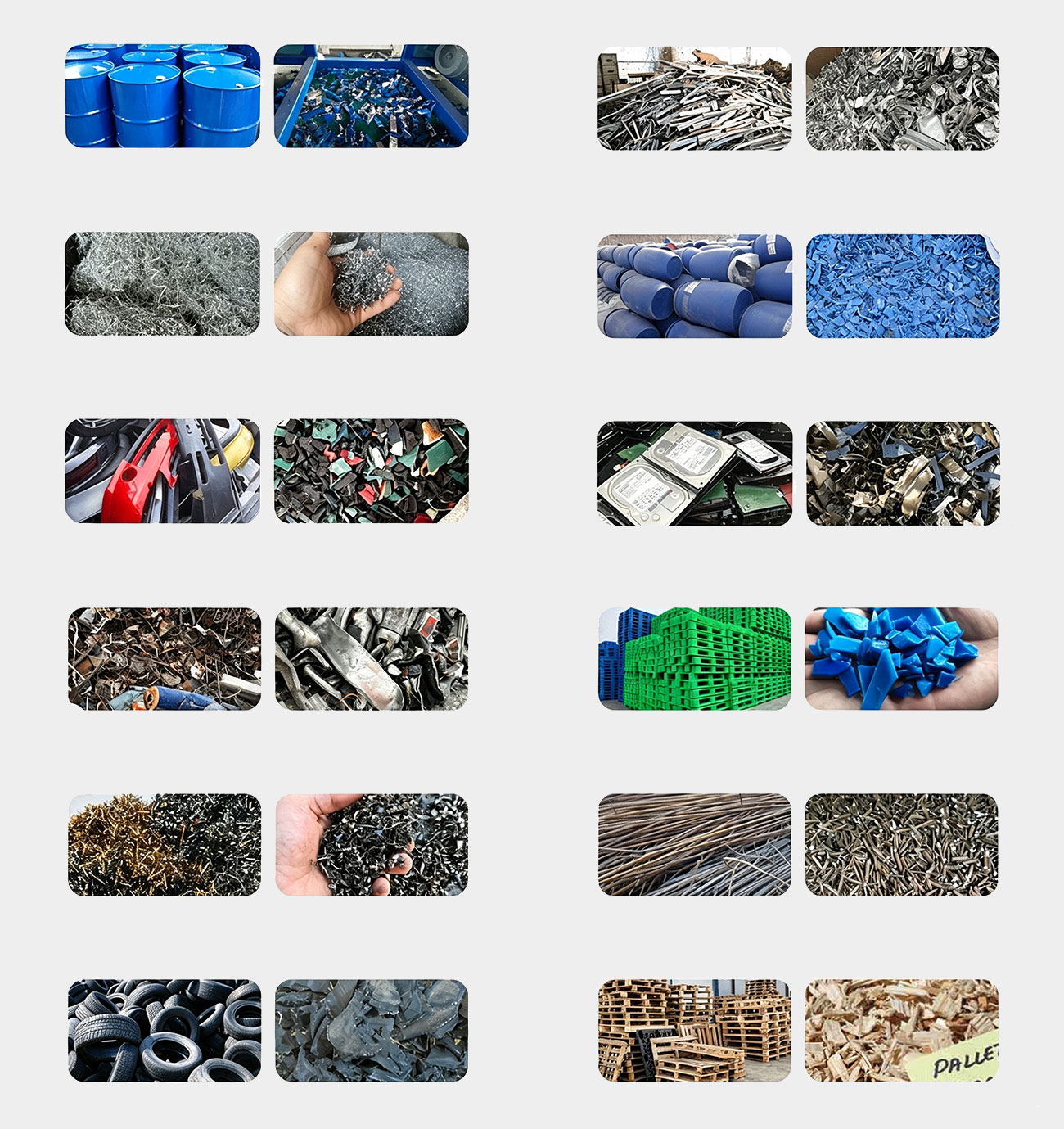
What raw materials can this metal shredder process?
Shredders have an extremely wide range of applications and can process the following materials: metals—such as car bodies, aluminum profiles, steel drums, "white goods" (household appliances), and non-ferrous metal scrap; wood—including pallets, construction and demolition waste, tree roots, logs, and cable reels; plastics—such as plastic blocks, scrap, pipes, bottles, containers, and films; tires—including whole passenger car and truck tires; waste—such as municipal solid waste (MSW), industrial waste, and hazardous waste; and special materials—including e-waste, cardboard, and hazardous substances (e.g., chemicals in drums).
What are the key characteristics of a shredder?
High torque, low rotational speed: Although the shredder operates at a low speed, it generates immense torque, allowing it to easily shred even the toughest materials without jamming. Shearing and tearing action: The primary force applied is shear stress, which is highly effective for both ductile materials (such as metals) and fibrous materials (such as wood or tires). Irregular output: The shredded material typically emerges in the form of strips, flakes, or chunks, rather than uniform, gravel-like particles. Volume reduction: The primary purpose of a shredder is to reduce the size of bulky or irregularly shaped items, facilitating more efficient transport, storage, or downstream processing.
Key Factors to Consider When Choosing a Shredder?
Key considerations for selecting a shredder include: Feed material—what are you shredding? (Consider its size, composition, and abrasiveness.) Desired output size—how small should the shredded particles be? Throughput capacity—how much material needs to be processed per hour? End goal—is the objective to reduce volume, produce fuel, or break down materials? In short, shredders serve as the workhorses of the recycling industry, utilizing a "tearing and shearing" action to break down large, bulky, or tough materials that other types of crushers cannot handle.
What is the production capacity per hour? Can we customize it?
Capacity ranges from 0.5t/h to 20t/h. We support customized models according to your requirements.
What is the voltage for this machine? Can it match our local power supply?
Standard voltage is 380V/50Hz. We can adjust motors to 220V, 415V, 440V, 60Hz to fit your country’s grid.
How about the blade service life? Is it easy to replace?
Blades are made of high-alloy steel, long service life. Replacement is simple, we supply spare blades together.
Do you provide installation guidance and after-sales service overseas?
Yes. We send English operation manuals and video guides. Engineers can go abroad for installation training if needed.